Confidence, DVDs, and the Illusion of Progress
January 2006
January has a way of making us feel serious.
The holidays are over. The noise fades. Mornings turn cold and quiet, and it feels like the right time to begin something properly. That’s how it felt with Tex.
December had been about getting him home, settling him in, and convincing myself I was ready.
January was going to be about training.
I had a plan.
Or at least I thought I did.
What I Thought I Was Doing
I was following a Clinton Anderson DVD series, step by step, as faithfully as I knew how.
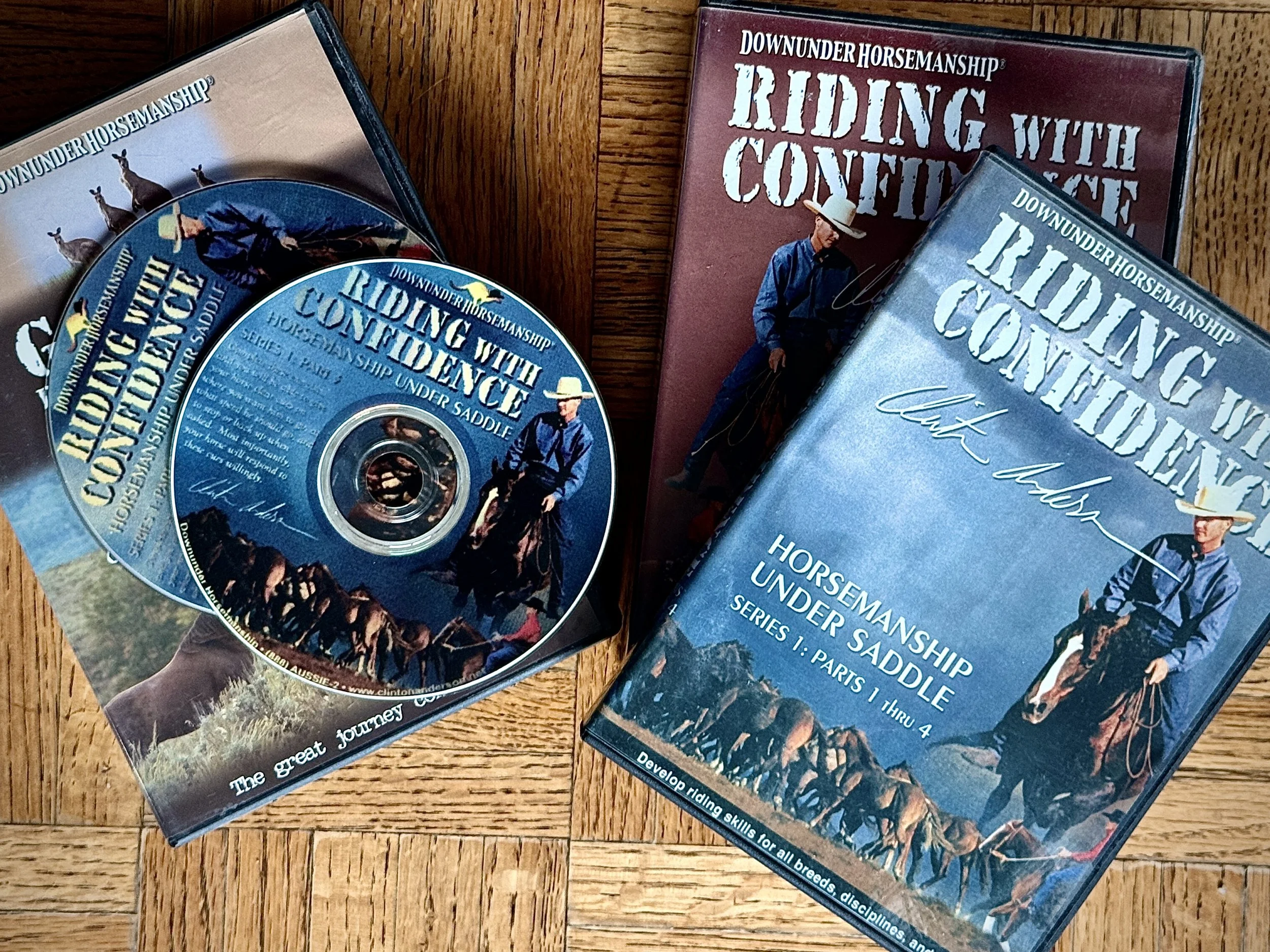
My virtual trainer.
The program made sense. The exercises were clear.
Lunge.
Desensitize.
Lateral flex.
Yield the hindquarters.
Yield the forequarters.
Back up.
Repeat.
The logic felt simple: do the work, get the result.
So I worked. A lot.
I believed effort was the variable that mattered most. If something didn’t improve, the answer was more repetition, more sessions, more time. Long workouts felt like commitment. Short ones felt like cutting corners.
Structure gave me comfort. It gave me something to hold onto while confidence was still thin.
Tex, meanwhile, was learning that this new human had rules.
Different ones than he’d had before.
What Was Actually Happening
My journal from early January reads like a checklist written by someone afraid to miss something important.
I logged start times and end times. Numbered workouts. Noted improvements in small increments. I had no idea I’d revisit these notes twenty years later.
“Quick easy workout… groundwork number 10.”
“Change of direction for 20 minutes. Got him pretty hot.”
“Still hyper. Sensitive yielding hindquarters.”
The entries pile up quickly.
Morning sessions.
Afternoon sessions.
Even night work under poor lights, because that was the time I had.
I didn’t question the volume. If anything, I took pride in it.
Tex was patient, but confused at times. He’d already had trainers. Their methods were on him. Now here I was — a new guy with different expectations, inconsistent timing, and confidence that hadn’t earned its place yet.
Flexing became my fixation.
Clinton emphasized it heavily, and I took that to heart. Poor Tex got flexed from the ground, from the saddle, at a standstill, before work, after work. One day stretched to forty-five minutes, as if repetition alone would turn my hands into something softer.
There were wins.
He loaded better.
Accepted the bit.
Yielded more readily.
I ended sessions on quiet notes when I could. I wrote improving more than once in the margins. Those words mattered to me. They reassured me that the system was working.
What I didn’t write down was how often I went back to the DVDs at night, rewinding the same segments, trying to find what I was missing.
What I Didn’t Understand Yet
Horses don’t need more information.
They need clearer information.
They don’t learn in a straight line that rises evenly over time.
Timing matters more than duration.
Confidence matters more than effort.
Leadership isn’t about how many questions you ask. It’s about how clearly you ask the important ones.
In January 2006, I was asking a lot of questions.
I confused activity with progress.
Structure with understanding.
Forward motion with direction.
Tex was learning. He was adapting. He was filling in the gaps where my clarity should have been. In ways I couldn’t yet see, he was learning faster than I was.
January ended with momentum.
Thirty workouts.
More saddle time.
Longer sessions.
A growing belief that I was on the right path.
I was moving forward.
I just hadn’t learned yet how to tell the difference between moving forward and actually going somewhere.
Effort can substitute for skill for a while.
Horses are patient that way.
They just don’t confuse the two.