Thirty Sessions
Thirty sessions sounds like progress.
It sounds like commitment. Like momentum. Like someone doing the work instead of just talking about it. By the time I could say it out loud, I believed it meant something.
I’d put in the time.
What I didn’t yet understand was how easy it is to confuse movement with direction.
The Comfort of a Plan
By then, the routine had hardened.
Same tools.
Same order.
Same expectations.
Lunge.
Change direction.
Desensitize.
Yield.
Flex.
Back.
Repeat.
The DVDs gave me structure, and structure felt like safety. If I followed the steps, I didn’t have to face the more uncomfortable question: whether I actually knew what I was doing.
I wasn’t guessing anymore.
I was mechanical.
Which was the problem.
The Timeline Nobody Brags About
Thirty sessions didn’t happen quickly.
This wasn’t a trainer’s schedule. I was running the store, opening in the morning, closing at night, squeezing horsemanship into whatever corners of the day were left.
Some weeks I got three sessions in.
Some weeks I got one.
Thirty sessions took months, not weeks.
And because it took months, each session carried extra weight. I didn’t just want improvement. I wanted proof.
Proof I hadn’t spent my money and pride on a mistake.
Proof I could figure this thing called a horse out.
When Compliance Looks Like Learning
Tex complied.
Mostly.
He learned the patterns. Anticipated transitions. Moved when I asked, even when the ask wasn’t very good. He was becoming polite.
I mistook that for understanding.
My notes from those sessions sound confident. Efficient. Almost robotic.
“Session 24. Good.”
“Session 27. Better today.”
“Session 30. Solid work.”
I wasn’t getting tangled in my lead rope anymore.
I hit myself with the stick and string less often.
The mechanics were improving.
The understanding lagged behind.
What the notes don’t show is how tense I was becoming.
I worked longer when things felt off. Repeated exercises when I didn’t like how they felt in my hands. Chased softness instead of earning it. I told myself this was normal — that you push through the awkward phase to get to the good part.
I didn’t realize I was building pressure faster than I was learning how to release it.
Borrowed Confidence and the Fire Hose
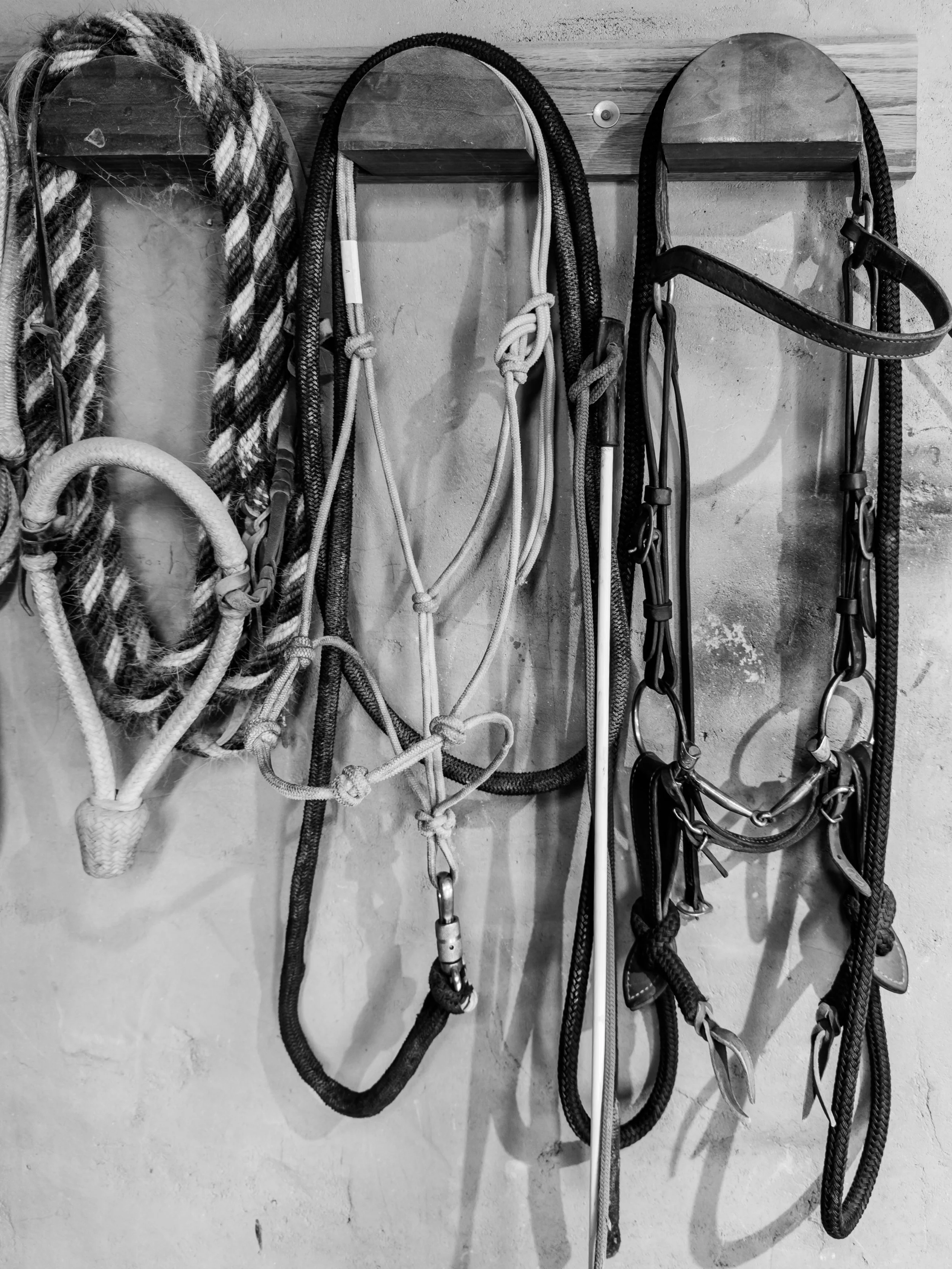
The program had a lot of moving parts, and I tried to hold all of them at once.
Stick and string.
Fourteen-foot lead rope.
Long lunge line.
Phases.
Steps.
Order.
Timing.
Feel.
It felt like drinking from a fire hose.
Clinton talked constantly about feel and timing. About how few people start with either.
Knowing that didn’t help.
I had structure.
I had volume.
I had repetition.
What I didn’t have yet was awareness.
What Thirty Sessions Hid From Me
The strain showed up in small ways.
A tighter jaw.
A quicker brace.
A look that said he was listening, but not really hearing me.
He wasn’t refusing.
He wasn’t being “bad.”
He was tolerating me.
I was studying my DVDs more than my horse. That should have worried me more than it did.
Somewhere along the way, I’d decided the answers lived on the screen, not at the other end of the lead rope. The program was the constant. Tex was the variable.
I treated him like a generic horse, assuming that if I followed the steps closely enough, he’d respond the way all horses were supposed to.
I didn’t yet understand how much I still didn’t know — or how much of this couldn’t be learned secondhand.
Because toleration looks a lot like cooperation when you’re hungry for reassurance.
Thirty sessions gave me confidence — but it was borrowed confidence. The kind that comes from repetition without reflection. I felt like I’d earned something, even though I couldn’t quite name what it was.
I thought volume equaled depth.
I thought structure equaled leadership.
I thought showing up was enough.
Tex was learning the system.
I was learning how easy it is to mistake activity for understanding.
Then we left the safety of the training pen.
And the trail started asking questions the DVDs never covered.