Cheap Education
People say the best investment you can make is in yourself. I agree. I am also my mother’s son, which means I prefer self-improvement at bargain prices. I’m cheap. After losing Tex, I had every reason to learn more before I bought another horse.
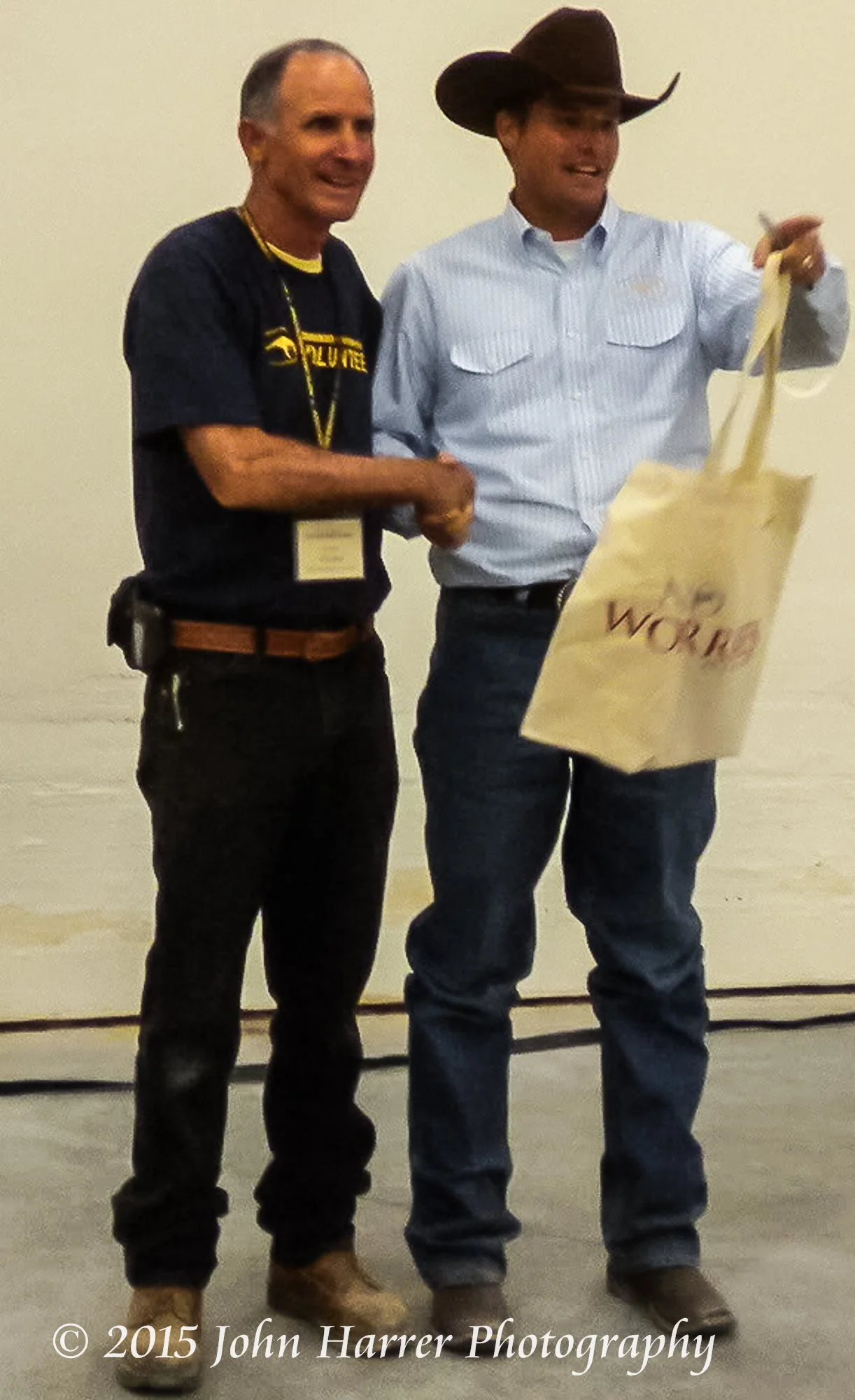
The year before, I had gone to a Clinton Anderson Walkabout Tour through my No Worries Club membership. While wandering through the shopping area, I noticed some perfectly normal-looking people wearing lanyards. This interested me. In any crowd connected to horses, “normal-looking” narrows the field considerably.
I started talking with them and discovered they were volunteers.
That was a revelation.
They got into the event, saw what went on behind the scenes, and maybe learned a few things, all for the low, low price of a few hours’ work. Other people were paying for this education.
“How hard is the work?” I asked.
“Mostly moving stuff from one place to another” was the common answer.
This was a tuition plan I could get behind.
The Golden Age of Clinicians
Soon I discovered there were other horse expos beyond the Clinton event. This was during the golden age of horse clinicians, when trainers had figured out there was less wear and tear in demonstrating horsemanship than in climbing on problem horses for a living. The smart ones were no longer just training horses. They were training owners, selling memberships, moving merchandise, and building followings. God bless America.
Horse expos were basically trade shows for horse people, which meant they had arenas, vendors, demonstrations, and enough opinions to start three small wars. More importantly, they needed volunteers.
That is how I found myself at Equine Affaire in Pomona.
Two hours of work got you in for the day and earned you a pass. That was all I needed to hear.
George Morris
I arrived at the fairgrounds, checked in, and was led to the main arena by an assistant who gave me my full briefing.
“You’ll be in here with George Morris. Do whatever he tells you.”
That was it.
I had no idea who George Morris was. His riders were in English saddles, which I considered of little use to me since they had no saddle horn to grab in an emergency. My plan was simple: put in my two hours, do my duty, and then go find the real horsemanship.
Then George started teaching.
He was fiery, sharp, and demanding. He barked out corrections like a man who had no interest in wasting a syllable. “Too much inside leg,” he snapped, and my head whipped from George to rider to horse and back again, trying to figure out what too much inside leg even looked like. I must have looked like I was watching a tennis match.
The more he talked, the more I paid attention. He wasn’t just yelling. He was seeing things. Tiny things. Things I would have missed in a hundred years. Position. Timing. Balance. Intention. He could look at horse and rider and diagnose the problem almost before they had finished making it.
A couple of times he caught me staring at him instead of minding my volunteer duties. At one point he gave me a crooked smile and a wink, as if he knew exactly what was happening. I had come to move poles. Instead, I was getting an education.
Later I learned George Morris had coached at the Olympic level.
Which Foot?
When my shift ended, I wandered to one of the smaller back arenas where the lesser-known trainers worked. I can’t remember the man’s name now, which is unfortunate because what he said lodged in my brain and never left.
He told the audience you had to know which foot was moving under your horse.
This struck me as impossible. You’re sitting on the horse. You cannot see the feet. How were you supposed to know which foot was moving, much less why it mattered?
But by the end of his demonstration, he was calling the footfall before the horse backed, side-passed, or started a maneuver, and he was right. Every time. I stood there half skeptical and half irritated, the way a person gets when someone casually demonstrates a skill that had not seemed available to humans five minutes earlier.
Those early expos and seminars felt mystical to me. It was one thing to watch horsemen on television. It was another to stand twenty feet away and realize they were seeing things I didn’t even know existed. I couldn’t wait to get home and try it.
Apparently
On our next ride together, Ranae and I tried it.
“Okay, whenever the right hind lands, I’ll say now,” I announced.
It was like my horse and I were dancing to different songs. The only person enjoying this was Ranae. She laughed so hard she nearly fell off her horse.
Apparently, I still had a lot to learn.